
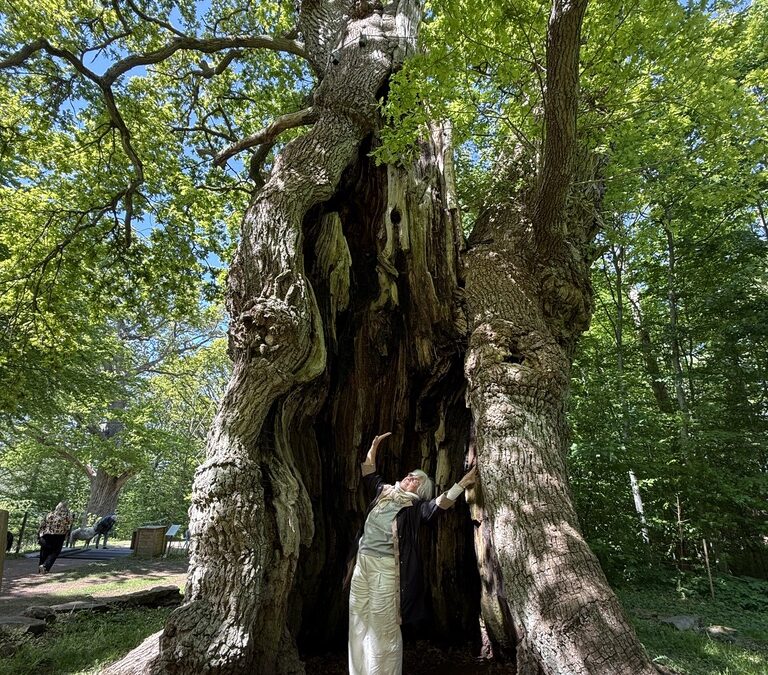
Nostalgia for the 1980s is just another illusion. The decade fascinates the young and comforts everyone else. It is endlessly recycled in films, television, and popular culture, feeding a sentiment that is sometimes disconnected from reality. The 1980s were euphoric, certainly—but what a mirage! Objectively speaking, they were neither easier nor better than today.
Version prépubliée de l’article à paraître prochainement dans le magazine Recto Verseau de juillet 2026.
More than half a century ago, to distinguish ourselves from a neat, respectable, hardworking, and rather dull society, we wore bell-bottom trousers and long flowing skirts. Far removed from the sophisticated elegance of the great fashion houses, our appearance was colorful, generous, and vibrant. We wanted to breathe, to live, to escape the endless “you must” and “you should,” and the pressure to conform. We wanted to create rather than merely endure. We wanted space, and our clothes were one expression of that need.
The other day, however, I was astonished when I caught sight of a silhouette from another era turning a street corner. She approached with a light, confident stride, as if proclaiming that her whole life lay ahead of her. Instantly, I was transported back to my youth and to my dream of a free and happy life.
It did me a world of good because, right there before me, that dream had somehow materialized once again. This young woman radiated the confidence of being herself. She moved effortlessly through the street, perfectly at ease in her element. She seemed unconcerned with her surroundings while simultaneously belonging fully to them.
Each new generation—our children and grandchildren—is born carrying this same dream. Thus renewal perpetuates itself from age to age. On the surface, the world changes, civilizations flourish and then fade, but the essence of humanity remains unchanged, and it is this essence that inspires renewal in the world.
In the 1970s and 1980s, we sought renewal in the East. Disappointed by established religions, which seemed to us devoid of genuine spirituality, and disillusioned with political activism, many of us turned toward a more individual path centered on self-realization. It was the great Indian era of gurus, yoga, and meditation, as well as the Japanese era of martial arts—judo, karate, aikido, Reiki—not to mention the backpackers setting off in search of magical potions and nudist beaches.
Whatever one may say, it was a remarkable period that encouraged social mixing and the mutual enrichment of Eastern and Western cultures. Personal growth and well-being seemed limitless and guaranteed forever: peace and love forever.
Reality always catches up with dreams. Dreams shape reality, and reality, in turn, reshapes dreams. The experience of Osho’s followers in the 1980s perfectly illustrates this dynamic. The Pune Ashram in India, overwhelmed by the growing influx of spiritual seekers from around the world, led Osho’s community to establish itself in Oregon, in the United States. Within a single year, the sannyasins transformed a vast abandoned desert ranch into an oasis, complete with artificial lakes, water-treatment systems, crops, livestock, roads, and small dwellings for several thousand people.
We wanted to create our own ecological and spiritual Eldorado: to live, work, and meditate together in an authentic way. We wanted to realize our dream of living happily together forever, something that seemed possible only by distancing ourselves from conventional society and its prevailing mindset.
After five years, however, confrontations with the local population forced Osho and his followers to leave the ranch behind, abandoning everything they had built. One year later, back at the Pune Ashram, the dream remained intact. It found expression in renewed creativity—greater than before, yet better adjusted to reality and more fully integrated into society.
In truth, Osho’s vision was never the creation of an alternative community, still less the founding of a new religion. His dream was not the utopia of a new world, which would imply that a small group of individuals could somehow dominate the world—an absurd notion. What he proposed was that we free ourselves from the mental attitudes that create unnecessary suffering. He encouraged us to awaken in awareness, to understand and dismantle the borrowed and unconscious mechanisms that govern our behavior. By renewing ourselves, we evolve continuously alongside an ever-new world.
It is impossible to deny that the planet has entered a period of crisis. The peace-and-love mindset—being cool in every situation, believing we are all citizens of the world—is reaching its limits. There is no point burying our heads in the sand: it will not survive unchanged. Yet the human dream and humanity’s capacity for resilience remain intact.
In the talks later published as The Book of Wisdom, delivered at his Pune Ashram in February 1979, Osho already warned:
“You may be the last generation that has the possibility to rebel, and if you do not rebel, there may not be another chance. Humanity may be reduced to a robotic kind of existence. So rebel while there is still time. I do not think much time remains. Perhaps only this last part of the century, these next twenty-five or thirty-five years. If humanity can rebel within these next twenty-five years, it is the last opportunity; otherwise people will become totally incapable, and their unconscious, programmed by society, will dominate them.”
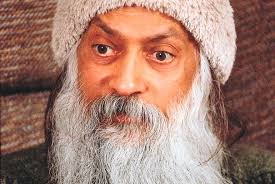
When Osho spoke these words, there were no personal computers, no smartphones, and no artificial intelligence. Yet he already sensed the possibility of such a development. He devoted all his energy to awakening those who came near him, and I refuse to believe that it is too late.
With the rise of AI-driven mass surveillance, the erosion of living standards, and the advance of authoritarian populism, rebellion is becoming increasingly difficult. Yet every day, by reading newspapers or listening to our children, I discover signs of a growing soft rebellion spreading through all levels of society. Australia is banning smartphones for those under sixteen. People are campaigning to preserve cash payments. Car-sharing and co-housing initiatives are expanding. Many choose fitness, yoga, or sports rather than chemical solutions to stay healthy. Plant-based foods increasingly replace meat. Hiking trails are filled with cheerful groups of walkers. Total sacrifice for the sake of a career no longer holds the same appeal.
Everywhere, quantity can be replaced by quality. We will inevitably return to more local production. Renewable energy will continue to advance. If we look around us, there are countless reasons to believe that our grandchildren will manage just as well as we did. They will keep what proved beneficial from our generation, reject what did not, and invent new paths of their own.
For this to happen, we must encourage rebellion against indoctrination, fake news, and the propaganda of war. We must never give up and must seize every opportunity that arises. Under no circumstances should we abandon the dream of a happy planet.
Chinta B. Strubin
Espace Keola
1091 Grandvaux